 Get A Quote



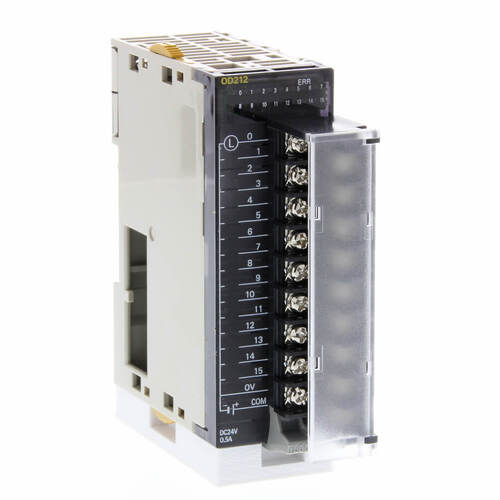
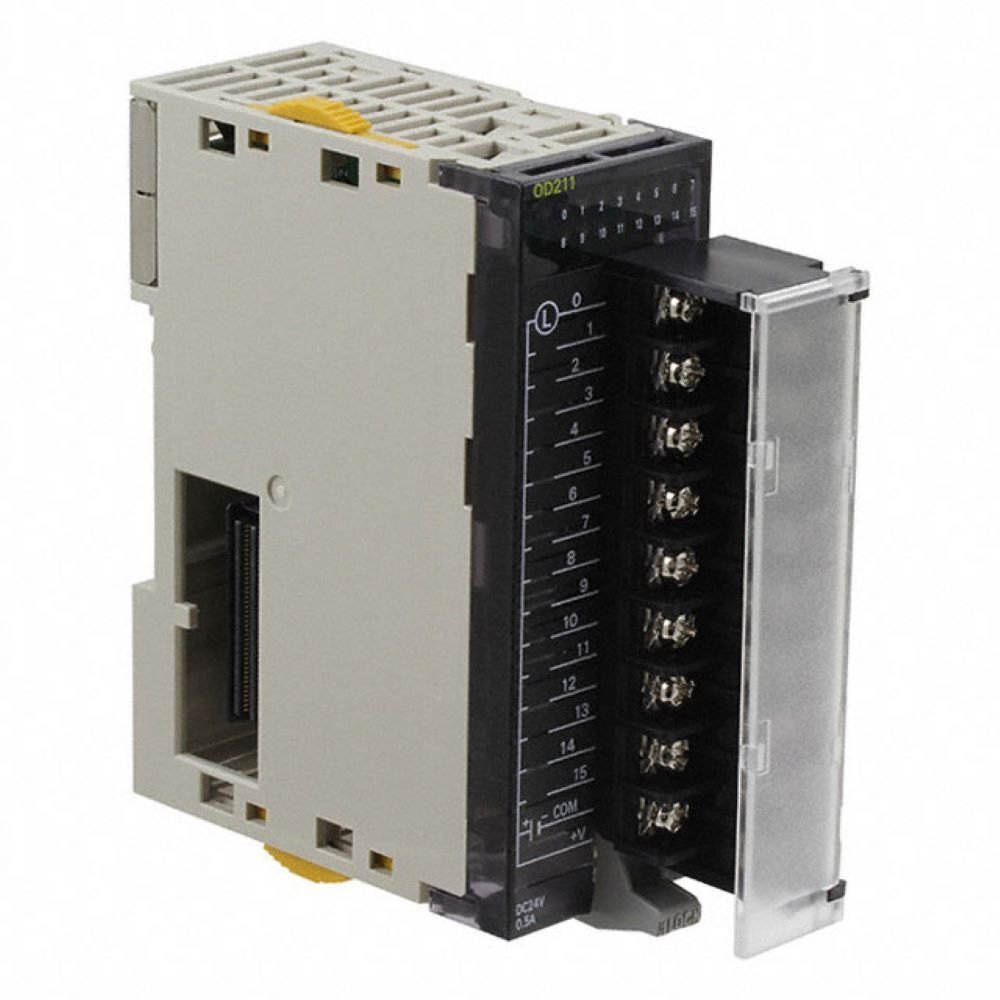
PLC Card CJ1W-OD211
10347 INR/Piece
Product Details:
- Efficiency High
- Rated Voltage 24 VDC
- Output Voltage 24 VDC nominal
- Operating Temperature 0C to 55C
- Frequency DC (Not Applicable)
- Input Current 80 mA max
- Mounting Type DIN Rail Mount
- Click to View more
X
PLC Card CJ1W-OD211 Price And Quantity
- 10347 INR/Piece
- 10 Piece
PLC Card CJ1W-OD211 Product Specifications
- DC (Not Applicable)
- 0C to 55C
- High
- 0.7 W max
- Plastic, Electronic Components
- PLC Digital Output Card
- Digital Output
- IP20
- Single Phase (Not Applicable)
- Industrial Automation, PLC Systems
- 10% to 90% (non-condensing)
- 80 mA max
- DIN Rail Mount
- 24 VDC
- 90mm x 31mm x 65mm (approx)
- New
- 24 VDC nominal
- None Included
- External Power
- 24 VDC
- CJ1W
- CJ1W-OD211
- Photocoupler
- Transistor (Sink type)
- ON: 0.1 ms max, OFF: 0.4 ms max
- 2 Points (8 points/common)
- 0.5A max
- Approx. 130 g
- Omron PLC CJ1W-OD211 Output Card
- 16 Points
PLC Card CJ1W-OD211 Trade Information
- Cash in Advance (CID)
- Asia
- All India
Product Description
PLC Digital Output Card,16 points, Sinking(NPN)output, Removable terminal block type
Product details
| Ambient Humidity | 10-90% |
| Ambient Operating Temperature | 0 to 55 Degree Celsius |
| Insulation Resistance | 20 Mega Ohms |
| Internal Current Consumption | 5 VDC 100 mA max |
| Leakage Current | 0.1 mA max |
| Maximum Inrush Current | 4.0 A/point,10 ms max. |
| Maximum Load Current | 0.5 A/point,5.0 A/Unit |
| Model No | CJ1W-OD211 |
| OFF Response Time | 0.8 ms max |
| ON Response Time | 0.1 ms max |
| Operating Load Voltage Range | 10.2 to 26.4 VDC |
| Rated Voltage | 12 to 24 VDC |
| Residual Voltage | 1.5 V max |
| Brand | Omron |
Optimized for Industrial Automation
The Omron CJ1W-OD211 output card is engineered to elevate efficiency in diverse industrial automation applications. With its 16-point transistor output, fast switching capabilities, and robust isolation via photocoupler, it ensures precise digital control in PLC systems. Designed to handle 24 VDC operations, this module is suitable for a wide range of automated machinery, helping streamline processes on the factory floor.
High-Speed and Reliable Output Performance
Leveraging a swift response timeON in just 0.1 ms and OFF in 0.4 msthe CJ1W-OD211 delivers rapid signal processing essential for time-sensitive automation. The photocoupler isolation protects circuits and enhances durability. Its high efficiency and accuracy translate to reduced downtime and greater productivity in control applications.
Flexible Mounting with Robust Protection
This output card features simple DIN rail mounting and is constructed from rugged plastic and reliable electronic components. The IP20 protection level safeguards against dust, making it suitable for challenging industrial environments. Its compact design allows for seamless integration into existing PLC cabinets without compromising on space or safety.
FAQs of PLC Card CJ1W-OD211:
Q: How is the Omron CJ1W-OD211 output card installed in a PLC system?
A: The CJ1W-OD211 is designed for DIN rail mounting, making installation straightforward within compatible PLC enclosures. Simply attach the card to the rail and connect the wiring per the manual. No additional accessories are included, so cables and terminals for connecting to output devices must be provided separately.Q: What types of applications are best suited for this output card?
A: This output card is ideal for industrial automation tasks involving digital output control, such as managing actuators, indicators, or relays in machinery, production lines, and process automation systems. Its fast response and reliable performance make it well-suited for time-sensitive or high-speed switching applications.Q: When should I use the sink type transistor output on this module?
A: Sink type transistor outputs are used when the connected field device requires the current to flow from its positive terminal to the negative (common) through the output transistor. It is typically chosen in systems where the field devices have a common ground with the PLCs external power source, providing reliable switching and isolation.Q: Where can the CJ1W-OD211 output card be used, considering its operating conditions?
A: This card operates reliably in environments with temperatures between 0C to 55C and humidity levels of 10% to 90% (non-condensing). Its IP20 protection rating makes it suitable for control cabinets or clean factory settings, but not for outdoor or high-dust areas without additional housing.Q: What is the process for wiring outputs and commons on this card?
A: The card features 16 outputs divided into two commons, with 8 points per common terminal. Each output can deliver up to 0.5A (24 VDC). Wiring should adhere to recommended terminal layouts, grouping output points according to their common terminals to ensure proper isolation and performance within circuit limits.Q: How does the photocoupler isolation benefit system reliability?
A: Photocoupler isolation electrically separates the control circuitry from the output side, protecting PLC internals from electrical noise, ground loops, and potential surges. This enhances durability and extends the overall system lifespan, reducing the risk of faults due to external disturbances.Tell us about your requirement

Price:
Quantity
Select Unit
- 50
- 100
- 200
- 250
- 500
- 1000+
Additional detail
Mobile number
Email

Other Products in 'Omron PLC And HMI' category

Vision Automotion & Robotic Solution
GST : 06AAIFV4857C1Z2
GST : 06AAIFV4857C1Z2
Contact Details

- Plot No.1678-P, Hero Honda Road, Sector-10A, Near Umang Bhardwaj Chowk,Gurugram - 122001, Haryana, India
- Phone : 07971990095
- Mr Sanjay (Director)
- Mobile : 07971990095

 Send Inquiry
 Send SMS
 Call Me Free
Vision Automotion & Robotic Solution
All Rights Reserved.(Terms of Use)
Developed and Managed by Infocom Network Private Limited.
Developed and Managed by Infocom Network Private Limited.

